

2026 Chevrolet Trax vs Honda HR-V: Which Compact SUV Is Right for Fort Lupton?
2026 Chevrolet Trax vs Honda HR-V: Which Compact SUV Is Right for Fort Lupton?
By Ryan Green, Marketing Director — Yoder Chevrolet | Updated March 2025
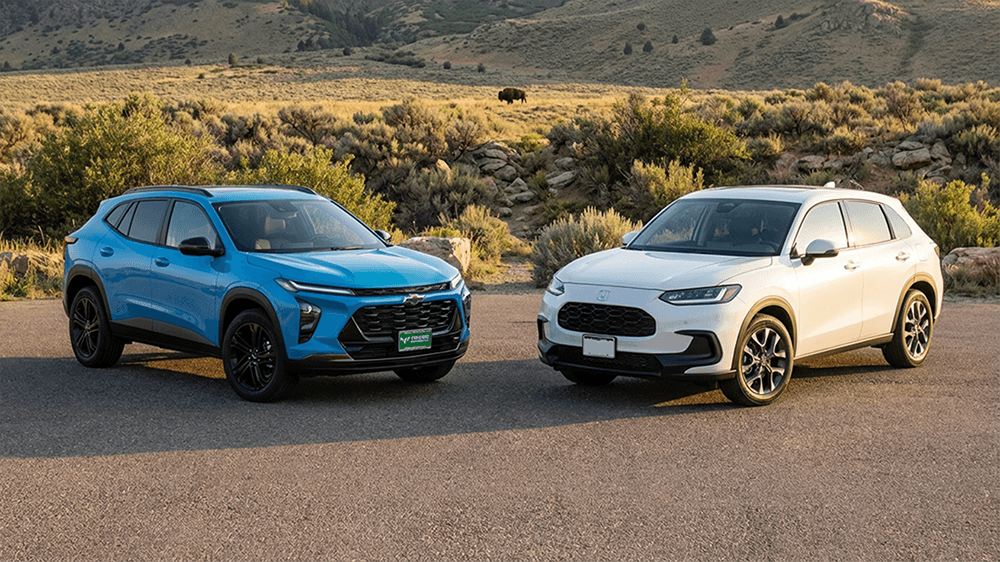
The 2026 Chevrolet Trax and Honda HR-V are two of the sharpest compact SUV options in the under-$26,000 range — and Fort Lupton buyers shopping both are asking the same questions: which one is cheaper, which has better cargo space, and does the Trax or HR-V make more sense for Colorado’s mix of eastern plains commuting and mountain weekend driving? We’ll give you the honest answer on all of it.
At a Glance
The 2026 Chevrolet Trax wins on price ($2,350 cheaper to start), standard wireless CarPlay, more expressive styling, and slightly more cargo space (25.6 vs ~24.4 cu ft). The Honda HR-V wins on horsepower (158 vs 137 hp), AWD availability, and the practical Magic Seat cargo system.
For the eastern plains commuter who wants the best value without AWD, the Trax is the clear choice. For the buyer who regularly drives winter mountain passes, the HR-V with AWD is worth the premium.
Head-to-Head Comparison: Trax vs Honda HR-V
| Feature | 2026 Chevrolet Trax | Honda HR-V |
|---|---|---|
| Starting Price | $21,700 | ~$24,050 |
| Engine | 1.2L Turbo 3-cyl | 2.0L 4-cyl NA |
| Horsepower | 137 hp | 158 hp |
| Torque | 162 lb-ft (turbo) | ~133 lb-ft |
| City MPG (FWD) | ~28 MPG | ~28 MPG |
| Highway MPG (FWD) | ~33 MPG | ~34 MPG |
| Cargo (behind rear seats) | 25.6 cu ft | ~24.4 cu ft |
| AWD Available | No — FWD only | Yes — available |
| Wireless CarPlay | Standard on all trims | Wired standard; wireless higher trims |
| Infotainment Screen | 11″ HD (LT and up) | 9″ standard |
| Cargo System | Fold-flat rear seats, 54.4 cu ft max | Magic Seat flip-up + fold-flat |
| Seating | 5 passengers | 5 passengers |
| Towing Rating | Not rated | Not rated |
Where the Trax Wins: Price, Wireless Tech, and Styling
At a Glance
The Trax starts $2,350 below the HR-V — the largest price advantage it holds over any competitor — and combines that with standard wireless CarPlay, slightly more cargo depth, and a significantly bolder exterior design.
For value-oriented Weld County buyers who don’t need AWD, the Trax delivers the better overall package for less money.
Price advantage — the biggest in its class: The 2026 Trax at $21,700 starts $2,350 below the Honda HR-V’s roughly $24,050 entry price. That’s a significant gap — the widest price advantage the Trax holds over any of its direct competitors. On a 60-month loan at a 6% rate, that $2,350 difference translates to approximately $45 less per month. For first-time buyers in Fort Lupton, Brighton, or Firestone where the monthly payment is the primary decision factor, the Trax’s starting price is genuinely compelling.
Wireless CarPlay standard across all trims: The 2026 Trax offers wireless Apple CarPlay and wireless Android Auto as standard equipment on all trims equipped with the 11-inch infotainment system. The Honda HR-V includes wired CarPlay on base trims, with wireless CarPlay available on higher-tier models. For buyers who use CarPlay every single day and want their phone to connect automatically without reaching for a cable, the Trax’s wireless-by-default approach is a daily convenience the HR-V base trims don’t match.
Cargo space (slight advantage): The Trax’s 25.6 cubic feet behind the rear seats edges the HR-V’s approximately 24.4 cubic feet — a 1.2 cubic foot lead. Both vehicles have 5-passenger seating, and the Trax’s 54.4 cubic feet maximum cargo volume (seats folded) is generous for the segment. The HR-V counters with its Magic Seat system’s unique flip-up configuration for tall items, which we’ll address in the HR-V’s strengths section.
Design and personality: The 2026 Trax is simply a more visually exciting vehicle than the HR-V. The Trax’s bold exterior — especially the ACTIV and RS trims — brings expressive design to a segment that often plays it safe. The HR-V has clean, functional styling that wears well over time but doesn’t turn heads. For younger buyers in the Fort Lupton and Brighton market who want their vehicle to reflect their identity, the Trax’s design portfolio gives them significantly more to work with. The ACTIV’s rugged outdoor personality is particularly resonant in Weld County.
Trax Wins: Price
$2,350 cheaper at the starting price — the biggest price gap the Trax holds over any direct competitor. At ~$45 less per month on a 60-month loan, this is a real and substantial advantage for budget-focused buyers in Weld County.
Trax Wins: Wireless Tech
Wireless CarPlay and Android Auto standard across all Trax trims with the 11″ screen. HR-V base trims use wired CarPlay only. For daily commuters who connect their phone every drive, the Trax eliminates the cable entirely.
Trax Wins: Design
The Trax’s bolder, more contemporary exterior design — especially the ACTIV and RS trims — brings expressive personality to the compact SUV segment. For buyers who care about how their vehicle looks, the Trax offers more visual options than the HR-V’s more conservative styling.
Where the HR-V Wins: Power, AWD, and Magic Seat Versatility
At a Glance
The HR-V makes 158 hp (vs 137 hp), offers AWD on upper trims, and features the unique Magic Seat cargo system that can configure the rear seats in ways the Trax cannot — including a flip-up mode for tall items.
For buyers prioritizing performance, AWD for mountain winters, or unique cargo flexibility, the HR-V earns its higher price tag.
Horsepower advantage: The Honda HR-V’s 2.0-liter naturally-aspirated 4-cylinder makes 158 hp — 21 more than the Trax’s 137 hp. In real-world driving, this translates to more confident highway passing, more relaxed merging from entrance ramps, and better performance when the vehicle is loaded with passengers and gear. The Trax’s turbocharged torque (162 lb-ft vs the HR-V’s approximately 133 lb-ft) provides strong low-end response, but the HP gap is noticeable at highway speeds when comparing the two back-to-back.
AWD availability: The Honda HR-V offers AWD as an option on upper trims. The 2026 Chevrolet Trax offers no AWD option — it is front-wheel drive only on every trim, including the ACTIV. For Colorado buyers with meaningful mountain driving in their lives — regular ski weekends at Steamboat, Eldora, or Arapahoe Basin, or regular drives over mountain passes — AWD provides better traction on snow, ice, and at altitude. The HR-V with AWD is the stronger mountain winter vehicle, and we’ll be direct about that.
Magic Seat cargo system: The HR-V’s rear seats flip up like theater seats (as well as folding flat), creating a tall vertical cargo space that’s uniquely useful for items that won’t lay on their side — potted plants, tall equipment, kayak paddles standing upright. The Trax’s rear seats fold flat for maximum horizontal depth (54.4 cu ft total), which is excellent for volume, but lacks the HR-V’s vertical configuration option. If you regularly haul tall, upright items, the HR-V’s Magic Seat is a genuine practical advantage.
Fuel economy (slight highway edge): The HR-V gets approximately 28 city / 34 highway MPG compared to the Trax’s 28 city / 33 highway MPG. City fuel economy is essentially identical at 28 MPG each — a rare true tie between these competitors. Highway, the HR-V has a 1 MPG edge that’s real but not dramatic. Over 12,000 annual highway miles at $3.50/gallon, that 1 MPG difference saves approximately $12 per year — noticeable over a long ownership period but not a decisive factor in most purchase decisions.
HR-V Wins: Power
158 hp vs 137 hp. That 21 hp advantage is noticeable when merging at highway speeds, passing, or hauling a full vehicle of passengers and cargo. For buyers who want assured, relaxed performance, the HR-V has the edge.
HR-V Wins: AWD
AWD is available on the HR-V. The Trax offers no AWD option on any trim. For Colorado buyers who drive mountain passes in winter — Berthoud, Cameron, or the high country — the HR-V with AWD is the more capable cold-weather vehicle.
HR-V Wins: Magic Seat
The HR-V’s rear seat bottoms flip up vertically to create tall cargo space for items that won’t lay flat. The Trax has more total volume (54.4 vs HR-V), but lacks this vertical configuration. For buyers who haul tall, upright items regularly, the Magic Seat is uniquely useful.
The Colorado Verdict: Which Makes More Sense for Weld County Buyers?
At a Glance
For eastern plains commuters on I-76 and US-85 who don’t need AWD for mountain passes, the Trax is the superior value at $2,350 less with better tech standard and comparable everyday performance. For buyers who ski or drive mountain passes regularly in winter, the HR-V with AWD is worth the premium.
Ask yourself one question first: Do you regularly drive mountain passes in winter? If yes, seriously consider the HR-V. If no, the Trax is the better buy.
Fort Lupton’s position on the I-76 corridor defines a specific driving lifestyle. The commute to Denver runs east-to-west across the flat eastern plains — roads that see snow plowed quickly, where black ice is the primary winter hazard rather than deep powder. Greeley to the north via US-85 and CO-257 is similarly flat and fast. For buyers who primarily drive these corridors five days a week, the Trax’s $2,350 lower starting price, standard wireless CarPlay, and equivalent city fuel economy (both 28 MPG) represent a straightforward value win over the HR-V.
The Trax’s 137 hp feels adequate on these routes. The turbocharged engine’s 162 lb-ft of torque gets the vehicle up to I-76’s 75 mph speed limit smoothly, and the 6-speed automatic shifts cleanly in everyday driving. You’ll notice the HR-V’s 21 extra horsepower if you drive them back-to-back, but in daily use the Trax is not underpowered for its purpose — it’s a commuter and family vehicle, not a performance car.
The calculation changes meaningfully when mountain driving enters the picture. Weld County’s I-76 corridor sits east of the Rockies, but the mountains are never far — Estes Park is under 90 minutes up US-34 from Fort Lupton. Steamboat Springs is three hours on US-40 over Rabbit Ears Pass. If you’re making these drives regularly in January and February, the HR-V’s available AWD provides real, tangible traction advantages over the Trax’s FWD-only platform on snow-packed passes.
An honest middle path worth knowing: a FWD vehicle with a dedicated winter tire set often out-performs an AWD vehicle on all-season tires in deep snow. If you choose the Trax and invest in a set of winter tires (Michelin X-Ice, Bridgestone Blizzak, or similar), you can reclaim much of the traction advantage the HR-V holds with AWD. The trade-off is the added cost and hassle of seasonal tire swaps. For buyers making this calculation, check with the Yoder Chevrolet service department about winter tire package pricing on the Trax — it may make the value math even more favorable.
The bottom line for Fort Lupton and Brighton buyers: if your driving is primarily the eastern plains corridor with occasional mountain day trips in favorable conditions, the Trax is the better buy — significantly more affordable, equally efficient in the city, and better equipped with standard wireless tech. If your Colorado lifestyle includes frequent winter mountain driving, the HR-V with AWD earns the additional $2,350 and deserves serious consideration.
Frequently Asked Questions: Trax vs Honda HR-V
More 2026 Chevrolet Trax Guides
Yoder Chevrolet — Fort Lupton, CO
Ready to See the Trax for Yourself?
Visit us at 601 Denver Ave, Fort Lupton, CO 80621 or call 303-900-5870. Serving Fort Lupton, Brighton, Firestone, Frederick, Platteville, and Greeley.
0 comment(s) so far on 2026 Chevrolet Trax vs Honda HR-V: Which Compact SUV Is Right for Fort Lupton?