

2026 Chevrolet Trax Colorado Buyer’s Guide: The Right SUV for the Eastern Plains
2026 Chevrolet Trax Colorado Buyer’s Guide: The Right SUV for the Eastern Plains
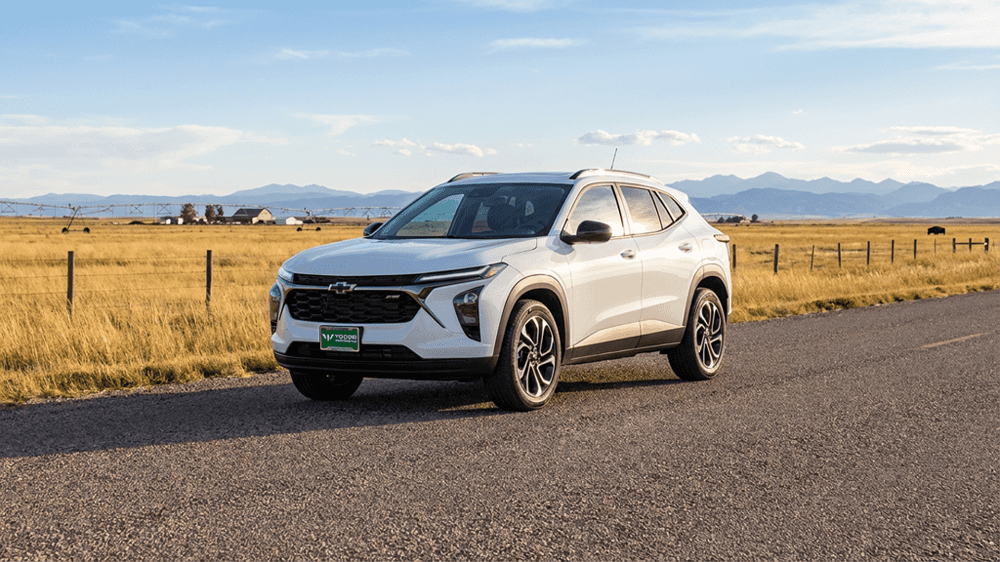
By Ryan Green, Marketing Director — Yoder Chevrolet | Updated March 2025
Most car reviews are written for generic American buyers in generic American cities. This one is written for the buyer who lives and drives in northern Colorado — specifically the Weld County buyer who commutes I-76, runs errands in Fort Lupton or Brighton, takes the family to Barr Lake on weekends, and occasionally heads toward the mountains via I-70. If that sounds like you, here is a direct, honest assessment of whether the 2026 Chevrolet Trax is the right vehicle for your daily life — and which trim level makes the most sense for your budget and driving needs.
Colorado Buyer’s Bottom Line
For commuters, young families, and first-time SUV buyers along the I-76 corridor, the 2026 Trax starts at $21,700 and delivers 30 combined MPG, standard safety tech, and enough cargo space for real northern Colorado life.
The honest caveats: FWD only (no AWD), no tow rating, and 137 hp. If you need to tow a trailer, have livestock panels to haul, or depend on AWD for mountain winter driving, the Trax is not your vehicle. For the commuter and practical household segment, it’s an excellent fit at a hard-to-beat price.
Who Buys a Trax in the Fort Lupton Area?
The Trax Buyer Profile
The Fort Lupton Trax buyer is a commuter, a young family, or a first-time SUV buyer — not a rancher hauling equipment or a weekend warrior who needs AWD for mountain trails.
Weld County has a wide range of vehicle buyers. Ranchers and agricultural workers in this area lean on full-size trucks for work. The Trax buyer is the other half of the county — the commuter, the young professional, the household that needs a reliable, affordable, fuel-efficient daily driver that fits the family’s routine without breaking the budget.
Walk through the buyer profiles we see at Yoder Chevrolet when it comes to the Trax:
The I-76 Commuter
Lives in Fort Lupton, Platteville, Roggen, or eastern Weld County. Works in Denver, Broomfield, or the north metro. Drives I-76 to I-25 five days a week. Wants 30+ MPG, a comfortable highway ride, and a car payment that doesn’t sting. The Trax at 33 highway MPG and $21,700 starting checks every box. The 2RS or ACTIV adds adaptive cruise for a more relaxed commute.
The Young Family
One or two kids. School runs, soccer practice, Walmart runs in Brighton, Costco in Greeley. Needs cargo space for a stroller and a week’s worth of groceries simultaneously. The Trax’s 25.6 cu ft behind the rear seats and fold-flat cargo expansion to 54.4 cu ft handles this without sacrifice. Standard Chevy Safety Assist gives parents peace of mind without requiring a more expensive trim.
The First-Time SUV Buyer
Drove a compact car for years. Wants more cargo, better road presence, and the elevated seating position. Doesn’t want to over-buy into a midsize SUV. The Trax bridges the gap — SUV utility in a compact package, with pricing under $22,000 that doesn’t require a stretch budget. The easy maneuverability makes it approachable for buyers not accustomed to a larger vehicle profile.
The Efficiency-Focused Buyer
Watches fuel costs carefully. May be a single-income household or a buyer who commutes significant miles annually. At 30 combined MPG, 12,000 miles per year costs roughly $1,400 in fuel at $3.50/gallon — meaningfully less than larger SUVs. The Trax is one of the best fuel values in the segment without stepping down to a subcompact hatchback.
Who the Trax is not for in Weld County: the rancher who needs to pull a livestock trailer, the oil and gas field worker driving on rough lease roads, the buyer who heads to Breckenridge every January and needs AWD on Loveland Pass. Those buyers are in a different aisle at Yoder Chevrolet — and that’s fine. The Trax is specifically and intentionally designed for the practical daily-driver buyer, and it does that job very well.
Eastern Plains Winter Driving: FWD on I-76 in Snow
Winter Reality Check
Weld County winters are not mountain winters — but they’re not mild either. Wind-driven snow and black ice on I-76 are real conditions the Trax will face. Here’s what you actually need to know.
The good news: standard Chevy Safety Assist, traction control, stability control, and ABS provide meaningful electronic safety nets on slippery pavement. The honest limitation: FWD only means deep snow or unplowed county roads are genuinely challenging territory for this vehicle.
Weld County winter driving is distinctly different from Front Range mountain driving. On I-76 between Fort Lupton and Brighton, and on the connector roads through Firestone, Frederick, and Platteville, the primary winter hazards are wind-blown snow creating reduced visibility and drifting, occasional black ice on shaded sections and bridges, and packed snow on secondary roads that haven’t been prioritized by CDOT plowing crews. These are real hazards, but they’re not the same as navigating Eisenhower Tunnel in January with AWD and snow tires.
For these eastern plains conditions, FWD with the Trax’s electronic safety systems is workable for a careful driver on good all-season or winter tires. The standard ABS prevents wheel lockup under hard braking on ice. Electronic stability control intervenes if the vehicle begins to understeer or slide. Traction control limits wheel spin when pulling away from a snowy stop. Lane keep assist and forward collision alert provide extra margin in reduced-visibility snow events. These systems can’t replace physics — they can’t give you AWD traction — but they meaningfully improve the safety margin within FWD’s limits.
The tire decision matters significantly for Colorado winter driving. The Trax comes with all-season tires from the factory, which perform adequately in light to moderate snow conditions. If you’re a buyer who regularly drives in deeper snow, commutes early in the morning before roads are plowed, or lives on an unimproved road, investing in a dedicated set of winter tires on a second wheel set is a more impactful upgrade than stepping up a trim level.
The honest limit: the Trax is not the vehicle for a buyer whose winter driving regularly includes unplowed county dirt roads, extended ranch access routes, or mountain pass driving in snowstorm conditions. If that’s your situation, the FWD-only Trax is a real limitation that no amount of safety electronics fully compensates for. The Chevrolet Equinox AWD at Yoder is a stronger choice for those buyers.
The Denver Commute: 35 Minutes on I-76
Commuter Math
The I-76 commute from Fort Lupton to Denver is about 35 miles one-way. At 33 highway MPG, that’s approximately 1.1 gallons each way — roughly $3.80 per trip at $3.50/gallon.
Over a 250-day work year (two-way commuting), that’s roughly 17,500 commute miles and about $1,900 in fuel for the commute alone. Compare that to a 25 MPG SUV: the same commute costs $2,450/year in fuel — a $550 annual difference that adds up to $2,750 over 5 years of ownership.
I-76 between Fort Lupton and Denver is a real Colorado highway — not a suburban boulevard. Agricultural equipment, semi-trucks hauling grain and livestock, CDOT maintenance vehicles, and variable-speed construction zones are all part of the daily drive. The Trax handles these conditions competently. The turbocharged engine provides adequate punch for merging and passing at highway speeds. The ride quality on I-76’s occasionally rough pavement is composed and comfortable without being harsh.
For buyers who commute to Greeley (~25 minutes via US-85 or US-34) rather than Denver, the calculus is even more favorable — shorter distances, lower speeds, and familiar roads. The Trax’s 28 city MPG covers the mixed urban driving that characterizes Greeley commuting well.
The junction of I-76 and I-25 near Brighton and the northwest Denver suburbs is one of the more congested sections of the daily commute during peak hours. The Trax’s compact size is an advantage in lane-change-heavy traffic, and the 2RS/ACTIV’s adaptive cruise control and blind-spot monitoring make dense freeway conditions meaningfully less fatiguing. If you’re doing this commute five days a week, the $2,200 step from LT to 2RS buys features that improve quality of life on every single commute day.
On the return trip — heading northeast on I-76 toward Fort Lupton, Platteville, and Roggen — the late-afternoon sun can create severe glare conditions as you drive directly into the setting sun in autumn and winter. IntelliBeam’s automatic high beams are less relevant here, but the forward collision alert and AEB remain active and provide backup protection in glare-reduced visibility conditions where even attentive drivers can be caught off-guard.
Weekend Adventures from Fort Lupton
Northern Colorado Recreation
The Trax’s 54.4 cubic feet of cargo space and comfortable highway cruising make it well-suited for the recreational destinations accessible from Fort Lupton — as long as those destinations are on paved or well-maintained roads.
Barr Lake State Park, the South Platte River corridor, downtown Denver, Estes Park via US-34, and Rocky Mountain access via I-70 are all within the Trax’s natural operating range. True off-road or rough-terrain destinations are not.
Barr Lake State Park (~20 minutes south). One of the Front Range’s most accessible birding and wildlife areas, Barr Lake is a straightforward destination from Fort Lupton. The park’s main roads are paved, and the Trax handles the drive and parking with ease. The 54.4 cubic feet of cargo space easily accommodates a day-trip’s worth of gear — cooler, chairs, binoculars, picnic supplies, and a kayak or two with a proper roof rack setup.
South Platte River corridor. The Platte runs through the heart of Weld County and offers fishing access, trail walking, and recreational spots accessible from Brighton through the river communities. The Trax handles the paved access roads with no issues. For the buyer who spends weekend mornings at a river access spot with a chair and a fishing rod, the Trax is perfectly suited — fuel-efficient to get there, cargo-capable enough to carry the gear.
Estes Park and Rocky Mountain National Park (via US-34, ~1.5–2 hrs from Fort Lupton). The approach to RMNP via US-34 is paved and well-maintained under normal conditions. The Trax handles the drive comfortably, and the turbocharged engine manages the moderate elevation gain on the Thompson Canyon approach better than a naturally aspirated engine would. Summer and fall visits to RMNP are well within the Trax’s capabilities. Winter visits — particularly in storm conditions — require more caution given the FWD-only drivetrain.
I-70 mountain corridor — skiing and mountain towns. Denver sits about 35 minutes from Fort Lupton, and I-70 access to Summit County, Vail, and Glenwood Canyon is straightforward from the metro. The Trax can make these trips on clear-weather weekends without issue. The challenge is winter — I-70 mountain passes and Eisenhower Tunnel (11,013 ft elevation) in snow conditions genuinely benefit from AWD capability that the Trax lacks. CDOT traction laws may require chains or a 4WD/AWD vehicle on certain mountain segments during storm conditions, and the Trax would not qualify for the AWD exemption.
Day trips to Denver. The 35-minute drive to Denver for a Rockies game, a concert at Red Rocks, dinner in LoDo, or the Denver Botanic Gardens is a natural use case for the Trax. The compact size is an advantage for finding street parking or navigating Denver’s increasingly dense parking structures. At 30 combined MPG, the fuel cost for the round trip is trivial — roughly $8–10 in gas. This is precisely the kind of use the Trax was built for.
The Value Proposition: $21,700 Starting in Northern Colorado
Price vs. Features
At $21,700 with wireless Apple CarPlay/Android Auto, 17-inch alloy wheels, Chevy Safety Assist, and a backup camera as standard equipment, the base Trax LS offers more technology per dollar than most rivals at the same price point.
The Honda HR-V starts around $24,000 for a comparably equipped base trim. The Toyota Corolla Cross starts around $23,000 with less standard technology at the entry level. For the features-per-dollar calculation at the entry level, the Trax wins clearly.
In the current Colorado new vehicle market, $21,700 buys a meaningful package in the Trax. That’s a reasonable monthly payment at current interest rates — well within reach for working households in Fort Lupton, Brighton, Firestone, and Frederick. Financing through Yoder Chevrolet’s on-site finance team can help buyers find the right rate and structure for their budget, and Chevrolet frequently offers manufacturer incentives and special APR programs that reduce the total cost of ownership further.
The total cost of ownership picture for the Trax is favorable beyond the sticker price. At 30 combined MPG, annual fuel costs for a typical Weld County driver (12,000–15,000 miles/year) run approximately $1,400–$1,750 at current gas prices. Insurance costs for a subcompact SUV at this price point are generally lower than for midsize or larger SUVs. Maintenance on the 1.2L turbo is straightforward — oil changes, tire rotations, filter replacements — without the complexity of larger powertrain systems.
In a region where the cost of living continues to rise — Fort Lupton and Weld County are not immune to the broader Front Range affordability pressures — an efficient, practical, affordable vehicle is not a budget compromise. It’s a financially intelligent choice. The Trax gives you the utility of an SUV without the financial weight of a midsize vehicle you may not actually need.
Which Trax Trim Is Right for You? Northern Colorado Recommendations
Five trims span from $21,700 to $25,400. Here’s a practical recommendation for Weld County buyers based on how you actually use a vehicle:
LS — $21,700
Best for: budget-conscious buyers, first-time Trax owners, or drivers who prioritize minimizing car payments. Gets you wireless CarPlay/Android Auto, full Chevy Safety Assist, and 17-inch alloys. Skip nothing safety-critical — just the premium features of higher trims.
1RS — $23,200
Best for: buyers who want a sportier exterior look without the full tech upgrade. Adds RS sport styling and machined alloy wheels over the LS. Same drivetrain and safety features as LS. If style drives your purchase decision and you’re happy with the LS’s technology level, the 1RS delivers a visual upgrade at a meaningful price.
LT — $23,200
Best for: families, daily commuters, and buyers who want the best everyday technology. The 11-inch HD touchscreen, 8-inch Driver Info Center, and 6-speaker audio make every drive more comfortable. Available wireless charging, heated seats, and heated steering wheel are well worth having on Weld County winter mornings. Available rear park assist adds useful backup detection.
2RS — $25,400
Best for: heavy I-76/I-25 commuters who benefit daily from adaptive cruise, blind-spot monitoring, and rear cross-traffic alert. Also adds an 8-way power driver seat, which matters on long daily commutes. The sporty black interior with red accents and 18-inch machined wheels is a bonus for buyers who like the look.
ACTIV — $25,400
Best for: buyers who want the full safety package with an outdoorsy aesthetic that matches the Weld County lifestyle. Same safety tech as 2RS, but with a rugged ACTIV grille, distinctive fascia, and 5-spoke 18-inch wheels that look at home heading toward Barr Lake or the Platte River. Still FWD — it’s the aesthetic of adventure, not a true off-road vehicle.
The Honest Assessment: Where the Trax Wins and Where It Doesn’t
| Category | Trax Performance | Notes for Colorado Buyers |
|---|---|---|
| Fuel Economy | Excellent — 30 combined MPG | 33 highway MPG is a real advantage on I-76 daily commutes |
| Entry Price | Strong — $21,700 | Undercuts most comparably equipped rivals by $1,500–$2,500 |
| Standard Safety Tech | Excellent — all 6 features standard | Every trim gets AEB, lane assist, forward collision alert |
| Cargo Space | Very Good — 54.4 cu ft max | Handles real family loads; competitive with Honda HR-V |
| Urban/Suburban Maneuverability | Excellent — compact and agile | Easy parking in Fort Lupton, Brighton, and Denver |
| Drivetrain Versatility | Limited — FWD only, no AWD | Adequate for eastern plains; limiting for mountain winter driving |
| Towing Capability | None — not rated for towing | Not for buyers who need to pull any trailer |
| Engine Power | Modest — 137 hp | Adequate for daily use; 162 lb-ft torque helps low-speed pull |
Frequently Asked Questions: 2026 Trax for Colorado Buyers
More 2026 Chevrolet Trax Guides
Yoder Chevrolet — Fort Lupton, CO
Your Local 2026 Trax Dealer on I-76
Visit us at 601 Denver Ave, Fort Lupton, CO 80621 or call 303-900-5870. Serving Fort Lupton, Brighton, Firestone, Frederick, Platteville, and Greeley.
0 comment(s) so far on 2026 Chevrolet Trax Colorado Buyer’s Guide: The Right SUV for the Eastern Plains