

2026 Chevrolet Trax Performance & Everyday Capability: What You Need to Know
2026 Chevrolet Trax Performance & Everyday Capability: What You Need to Know
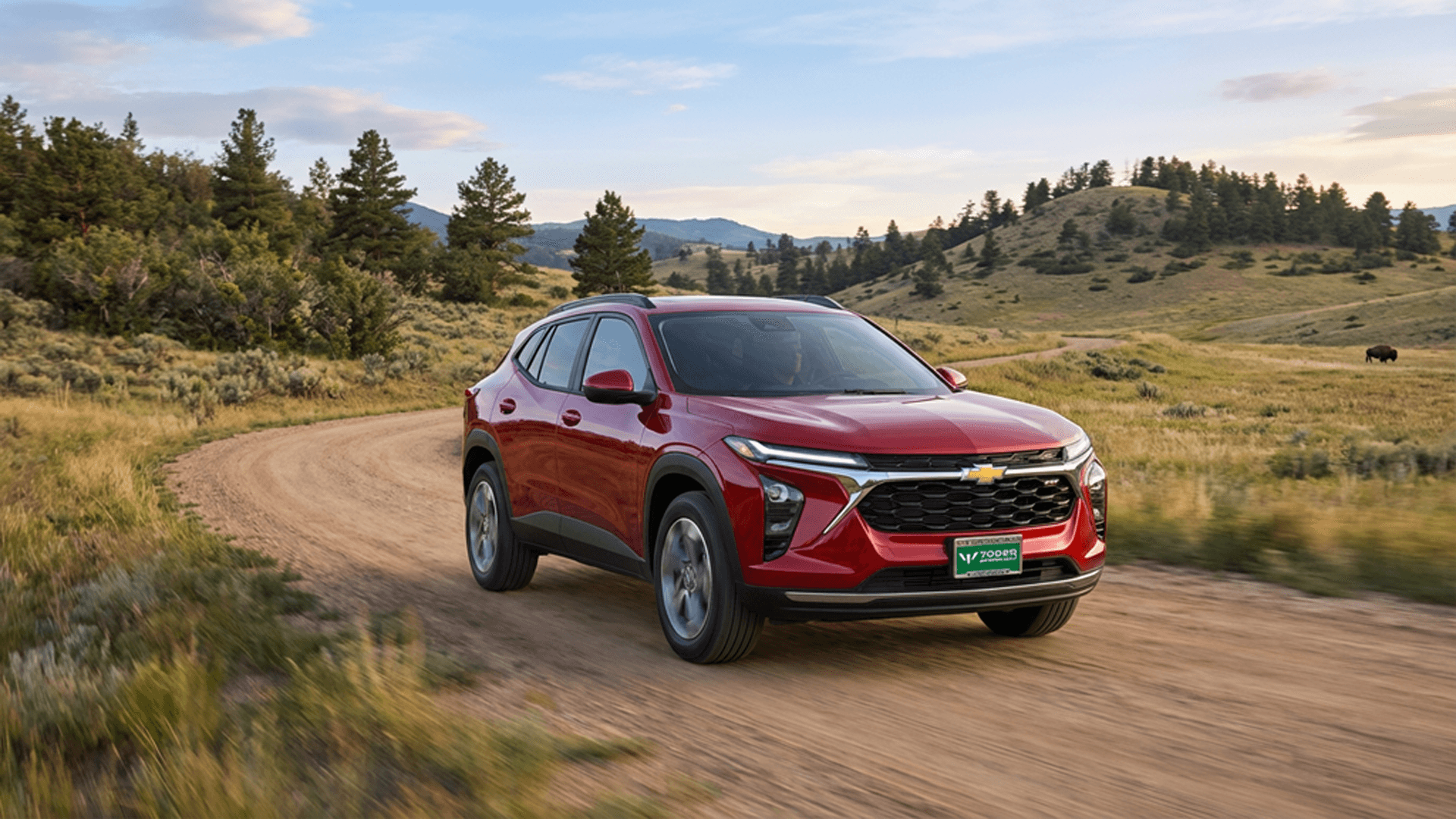
By Ryan Green, Marketing Director — Yoder Chevrolet | Updated March 2025
The 2026 Chevrolet Trax isn’t trying to be a muscle car or a trail-rated off-roader — and that’s exactly the point. For buyers along the I-76 corridor between Fort Lupton and Denver, this subcompact SUV is engineered to do what you actually need: park with ease in tight lots, return 30 combined MPG on the commute, and swallow enough cargo to handle life’s daily demands without asking for a premium price. Here’s an honest look at what the Trax does well, where its limits are, and whether it’s the right fit for your northern Colorado lifestyle.
At a Glance
The 2026 Trax is a practical, efficient daily driver built for urban maneuverability and commuter-friendly fuel economy — not towing or performance driving.
With 137 hp, 30 combined MPG, 54.4 cu ft of max cargo, and FWD-only drivetrain, the Trax is right-sized for Fort Lupton grocery runs, school pickups, and the 35-minute I-76 commute to Denver. No tow rating and no AWD option are the key trade-offs to know upfront.
The Engine: What 137 HP and 162 lb-ft Actually Feels Like
Engine Quick Facts
The 1.2L turbocharged 3-cylinder produces 162 lb-ft of torque — strong for the class — and delivers it early in the RPM band for confident everyday acceleration.
Paired with a 6-speed automatic transmission and front-wheel drive, the Trax engine is tuned for efficiency and urban responsiveness, not top-end performance. The turbocharger also helps offset the effects of Colorado’s altitude compared to naturally aspirated engines.
On paper, 137 horsepower sounds modest — and it is. But the real-world experience of the Trax is shaped more by its 162 lb-ft of torque, which arrives low in the rev range and makes low-speed driving and merging feel more confident than raw horsepower numbers suggest. Pulling onto I-76 from the Fort Lupton on-ramps, the Trax accelerates adequately for typical traffic conditions. You won’t win any stop-light drag races, but you also won’t feel like a hazard on the highway.
The 6-speed automatic transmission is smooth and unobtrusive for most driving situations. In stop-and-go conditions around Fort Lupton, Brighton, or Greeley, gear changes are barely perceptible. At wide-open throttle, the engine note from the 3-cylinder becomes noticeable — it’s not a refined sound — but this is not a scenario most Trax owners will encounter regularly. The engine is happiest cruising between 40 and 70 mph, which covers the vast majority of real-world use cases for this vehicle.
Worth noting for Colorado buyers: turbocharged engines handle altitude better than naturally aspirated ones. While the Trax won’t feel peppy at 10,000 feet on a mountain pass, the turbo compensates for thinner air more effectively than a comparable naturally aspirated engine. At Fort Lupton’s ~4,900 ft elevation and Denver’s 5,280 ft, the difference is modest but real — the Trax maintains its baseline performance better at elevation than a non-turbocharged competitor would.
Urban Maneuverability: Where the Trax Truly Shines
Size Advantage
The Trax’s compact footprint makes it genuinely easy to park and maneuver — a real-world advantage that matters every single day.
Whether you’re navigating a crowded Fort Lupton lot or hunting for a spot near Coors Field or Cherry Creek in Denver, the Trax’s tight turning radius and compact dimensions give it a clear edge over larger SUVs.
This is where the Trax earns its keep. The subcompact footprint means parallel parking on downtown Denver streets is approachable rather than stressful. Tight lots at Walmart in Brighton or Safeway in Greeley present no challenge. The steering is light and responsive at low speeds, which is exactly what you want when threading through a crowded parking structure or making a U-turn on a residential street.
Rear park assist (available on LT and above) helps you gauge distance when backing into a standard parking spot or loading dock. For buyers new to SUVs who are accustomed to the tight confines of a sedan, the Trax bridges the gap — you get the elevated seating position and cargo utility of an SUV without the added anxiety of maneuvering something the size of a Traverse or Suburban.
Visibility from the driver’s seat is good forward and to the sides. The rear visibility is adequate but limited — the backup camera standard across all trims is genuinely useful here. School drop-offs, grocery store lots, and urban errands are all within the Trax’s comfort zone.
Fuel Efficiency: 30 MPG Combined on the I-76 Commute
Fuel Economy
At 28 city / 33 highway / 30 combined MPG, the Trax keeps fuel costs low whether you’re commuting on I-76 or running errands around Fort Lupton.
The ~35-mile round trip between Fort Lupton and Denver costs roughly 1.2 gallons at highway speeds. Over a 250-day work year, that’s approximately 300 gallons annually — a meaningful efficiency advantage over larger or less efficient SUVs.
For commuters on the I-76 corridor — one of Colorado’s hardest-working highways, connecting Denver’s northern suburbs through the agricultural heartland of Weld County — the Trax’s 33 highway MPG is a real financial asset. At $3.50/gallon (a reasonable Colorado average), the difference between 33 mpg and 25 mpg over 15,000 annual miles works out to over $300 in fuel savings per year. That adds up over a 5-year ownership period.
The fuel tank holds approximately 13.2 gallons, giving the Trax a real-world range of around 430–450 miles on a highway tank. That covers a Fort Lupton-to-Denver round trip about 6 times on a single fill-up. For buyers doing shorter, mixed driving — errands in Fort Lupton, school runs, weekend trips to Barr Lake or Brighton — the 28 city MPG is the more relevant figure, and it remains competitive in the subcompact segment.
City Driving
28 MPG in stop-and-go conditions. Fort Lupton, Brighton, Greeley errands are well-covered. The turbo’s low-end torque helps efficiency in partial-throttle urban driving.
Highway Cruising
33 MPG on I-76, I-25, and US-34. The 6-speed automatic drops into a relaxed gear at 65–75 mph, keeping the engine calm and fuel consumption low.
Combined Average
30 MPG combined — realistic for most buyers’ mixed-use driving. Annual fuel cost on 12,000 miles at $3.50/gallon is approximately $1,400.
Cargo Space: 54.4 Cubic Feet in a Compact Package
Cargo Capability
The 2026 Trax delivers 25.6 cu ft behind the rear seats and 54.4 cu ft with seats folded — one of the more generous cargo profiles in the subcompact segment.
The rear seats fold relatively flat, and the wide rear hatch opening makes loading bulky items straightforward. For families, weekend adventurers, and daily errand-runners in northern Colorado, the Trax hauls considerably more than its exterior size implies.
The cargo numbers tell a compelling story. With 25.6 cubic feet behind the rear seats — about the size of a large rolling suitcase plus several grocery bags — the Trax handles typical daily loads with ease. A week’s worth of groceries for a small family, a couple of school backpacks, sports equipment, and the general clutter of an active life all fit comfortably. When you need more room, folding the rear seats opens the space to 54.4 cubic feet, which accommodates flat-pack furniture, camping gear for Barr Lake weekends, or haul loads that would require a roof rack on a typical car.
The cargo floor is relatively low, which makes lifting heavy items in and out easier than in taller SUVs. The rear hatch opening is wide, reducing awkward angling for long or bulky items. There’s no power liftgate on any trim level, but the manual hatch is light and easy to operate. For a subcompact SUV at this price point, the cargo utility is a genuine highlight.
One limitation to note: with five passengers on board, the 25.6 cubic feet behind the rear seats isn’t enormous. Road trips with full occupancy will require thoughtful packing. But for the most common use case — one or two occupants on daily errands or a weekly commute — the Trax has more than enough room to spare.
FWD on Eastern Colorado Roads: Honest Assessment
Drivetrain Reality Check
The 2026 Trax is FWD only — no AWD option exists. For eastern plains pavement and light winter conditions, FWD is generally adequate; for mountain passes or deep snow, it has real limitations.
Modern FWD vehicles with good all-season tires and traction control handle typical Weld County winter conditions reasonably well. However, buyers who regularly drive mountain roads in winter or live on unmaintained dirt/gravel should weigh this limitation carefully.
Let’s be direct: the lack of AWD is the most significant capability limitation of the 2026 Trax. There is no AWD option — every Trax sold comes with front-wheel drive, full stop. For buyers in Fort Lupton and Weld County whose winter driving is primarily on plowed or lightly snow-covered pavement — I-76, US-85, local roads — FWD with good tires is workable. The Trax includes standard traction control and stability control that help manage slippery surfaces. Chevy Safety Assist’s automatic emergency braking also provides a backup layer of protection in sudden stops on icy roads.
Where FWD shows its limits is in deeper snow, unplowed county roads, and mountain driving in winter conditions. If your weekend plans regularly include heading up I-70 to the ski resorts through Eisenhower Tunnel at 11,000+ feet elevation — and you want to do it in January — the Trax’s FWD setup is a real constraint. For this type of driving, a properly equipped AWD vehicle makes a meaningful safety difference.
For the majority of eastern plains buyers — commuters on maintained roads, families doing grocery runs and school pickups, young professionals in Fort Lupton or Brighton — FWD with modern safety electronics covers the realistic winter driving scenarios. The trade-off is better fuel economy and lower purchase price versus AWD alternatives. It’s a sensible trade-off for the right buyer. Just be honest with yourself about how and where you actually drive.
Ride Comfort and Highway Cruising Experience
The Trax’s suspension is tuned for comfort over sportiness, which is the right call for its target buyer. Daily road imperfections — expansion joints on I-76, occasional rough pavement, speed bumps in school zones — are absorbed without harshness. The ride doesn’t feel jittery or nervous, which can be a concern with smaller vehicles. At highway speeds, body motion is well-controlled; the Trax doesn’t wallow or float over undulations.
Wind noise at 70 mph is present but not intrusive — typical for the class. Road noise from coarser pavement (common on older Colorado highway sections) transmits into the cabin more than it would in a larger or more premium vehicle. For music listening, conversation, or podcast-listening commuters, the noise levels are perfectly acceptable. If you are sensitive to cabin noise and prioritize a hushed interior, you’d want to step up to a larger vehicle.
The elevated seating position — one of the key draws of an SUV over a sedan — is present but modest in the Trax. You sit higher than in a car, with improved forward visibility and easier entry and exit, but you’re not commanding the elevated view of a midsize SUV. For most buyers, it’s the sweet spot: enough height to feel like an SUV driver without the full bulk of a larger vehicle.
What the 2026 Trax Doesn’t Do: Honest Limitations
Buying a vehicle well means understanding its limits as clearly as its strengths. The 2026 Trax has three hard limitations you should factor into your decision:
No Tow Rating
The Trax is not rated for towing. Chevrolet does not recommend it for trailer use. If you need to tow a boat, utility trailer, or camper — even a small one — you need a different vehicle entirely. The Equinox, Blazer, or Traverse are the right Chevy choices for towing needs.
FWD Only — No AWD
Every 2026 Trax is front-wheel drive with no AWD option. For buyers who need true all-wheel capability for mountain driving in winter or unpaved access roads in Weld County, this is a genuine limitation that shopping a different model can solve.
Modest Engine Power
137 hp is adequate for daily driving but not exciting. Hard merges onto busy highways, steep grades with full passenger loads, or scenarios requiring quick power delivery will expose the engine’s limits. The 3-cylinder also makes noticeable noise under heavy throttle.
These limitations are features, not bugs — they’re why the Trax costs $21,700, returns 33 highway MPG, and handles parking with ease. The vehicle is built for a specific buyer and use case. If you fit that profile — daily driver, commuter, first-time SUV buyer, efficiency-focused household — the Trax delivers excellent value. If your needs fall outside that profile, there’s a bigger Chevrolet waiting for you at Yoder.
Is the 2026 Trax the Right SUV for You?
The 2026 Chevrolet Trax earns its place in the Chevrolet lineup by being exactly what it promises: a practical, affordable, well-equipped subcompact SUV for everyday life. For buyers in Fort Lupton, Brighton, Firestone, Frederick, and across Weld County who need reliable daily transportation, decent fuel economy, and enough cargo space to handle a busy household — without the price tag, size, or complexity of a larger SUV — the Trax is a well-calibrated choice.
The 30 MPG combined figure, 54.4 cubic feet of available cargo room, standard safety tech across all trims, and starting price under $22,000 make for a genuinely compelling package. Know what it doesn’t do (tow, handle deep snow in AWD style, or excite you on a canyon road), and you’ll be completely satisfied with what it does do.
Frequently Asked Questions: 2026 Chevrolet Trax Performance & Capability
More 2026 Chevrolet Trax Guides
Yoder Chevrolet — Fort Lupton, CO
Ready to Find Your 2026 Trax?
Visit us at 601 Denver Ave, Fort Lupton, CO 80621 or call 303-900-5870. Serving Fort Lupton, Brighton, Firestone, Frederick, Platteville, and Greeley.
0 comment(s) so far on 2026 Chevrolet Trax Performance & Everyday Capability: What You Need to Know