

Before the First Snow: Is Your Chevy Ready?
Before the First Snow: Is Your Chevy Ready?
By Ryan Green, Marketing Director — Yoder Chevrolet | Updated October 2026

Ask anyone who commutes on I-76 between Fort Lupton and Brighton in January. The eastern Colorado plains don’t ease you into winter. One morning it’s 55 degrees, the next it’s 14 with a ground blizzard that drops visibility to a car length. Your vehicle needs to be ready before that happens, not during.
This October, Yoder Chevrolet has two offers worth knowing about. We’re running a Buy 3 Tires, Get the 4th for $1 through November 30 on qualifying sets. And on select new Chevrolet vehicles, 0% financing for 60 months with no payments until 2027 is available through October 31. Both offers close on hard dates.
Quick Answer
The five most critical pre-winter checks for your Chevrolet: tire tread depth (6/32″ minimum), battery load test, coolant concentration, AWD or 4WD system function, and wiper blades rated for ice and snow.
Yoder Chevrolet in Fort Lupton offers multi-point winter inspections. Schedule now before October fills up: yoderchevrolet.com/service/schedule-service/.
Buy 3 Tires, Get 1 for $1 on qualifying sets through November 30. 0% financing for 60 months on select new Chevrolet models through October 31, 2026.
What Makes the Eastern Plains Different in Winter
Fort Lupton sits at 4,920 feet on the South Platte River corridor. The mountains are visible but not close. That distance matters for winter preparation because the plains interact with incoming weather systems differently than the Front Range towns do.
When a storm comes through, the Front Range foothills often act as a barrier that pushes the coldest, driest air east. That air hits the plains flat and fast. Temperature swings of 30 to 40 degrees in a few hours are common. Roads that were dry at noon can be sheet ice by 4 PM, especially on CO-7, CO-52, and I-76 where there’s no shade and very little windbreak.
The wind is its own problem. Ground blizzards on the plains can build to near-zero visibility within minutes even when no snow is actively falling — the wind just picks up dry snow from the fields and dumps it across the road. You can’t drive out of them quickly because they cover miles of open road.
The practical preparation for eastern plains winter driving: tires with good lateral grip (crosswinds require it), a battery that starts reliably at 10 degrees, and enough washer fluid to get through a road-spray slog when the semi in front of you is throwing slush. None of those things require spending a lot of money. They just require doing them before November.
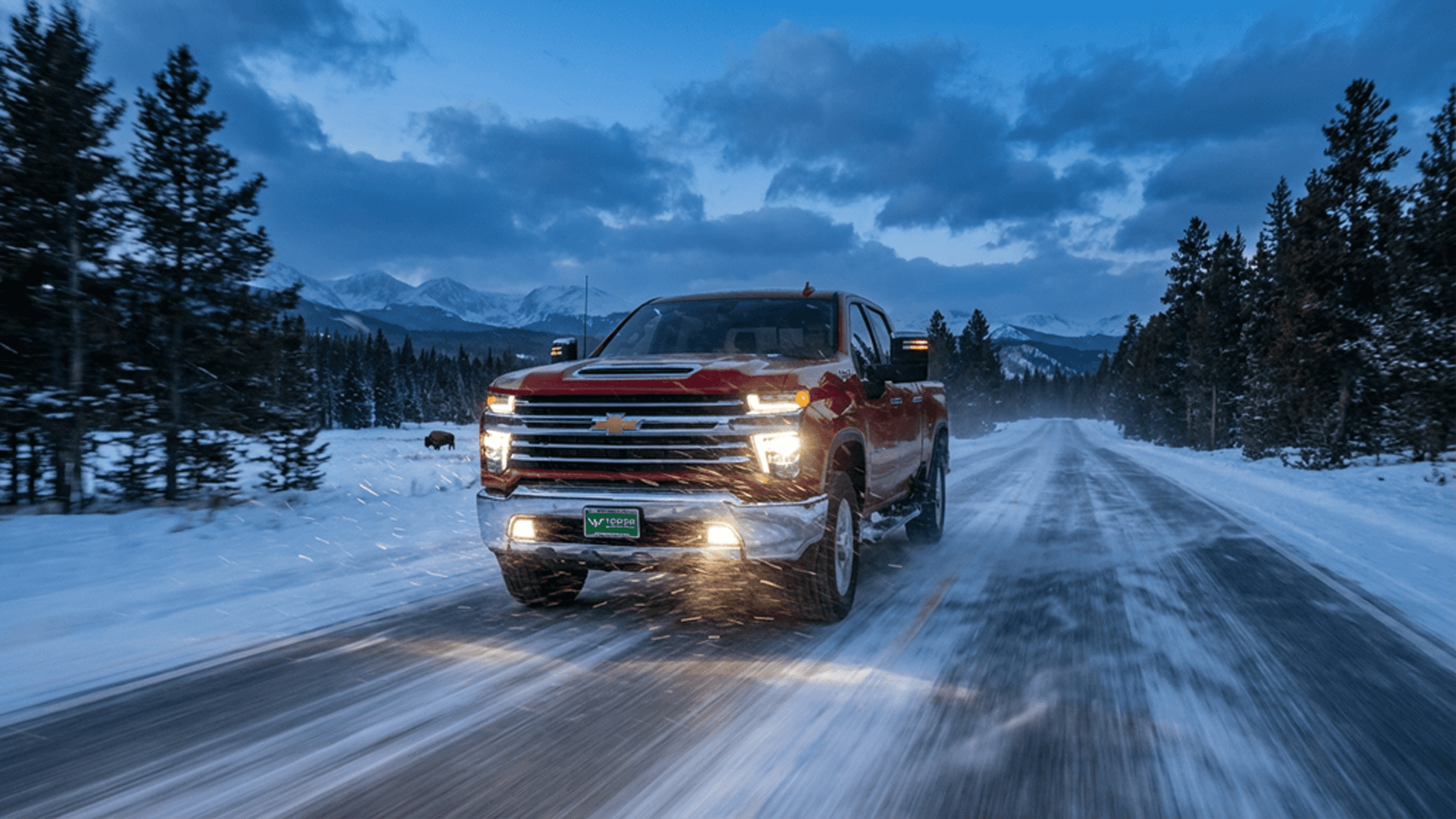
If you’re doing ranch work in Weld or Morgan county in the winter, add mud at frozen temperatures and rutted field access roads to that list. Tires and 4WD engagement matter just as much off-road as on it when it’s January and you’re 8 miles from the county road.
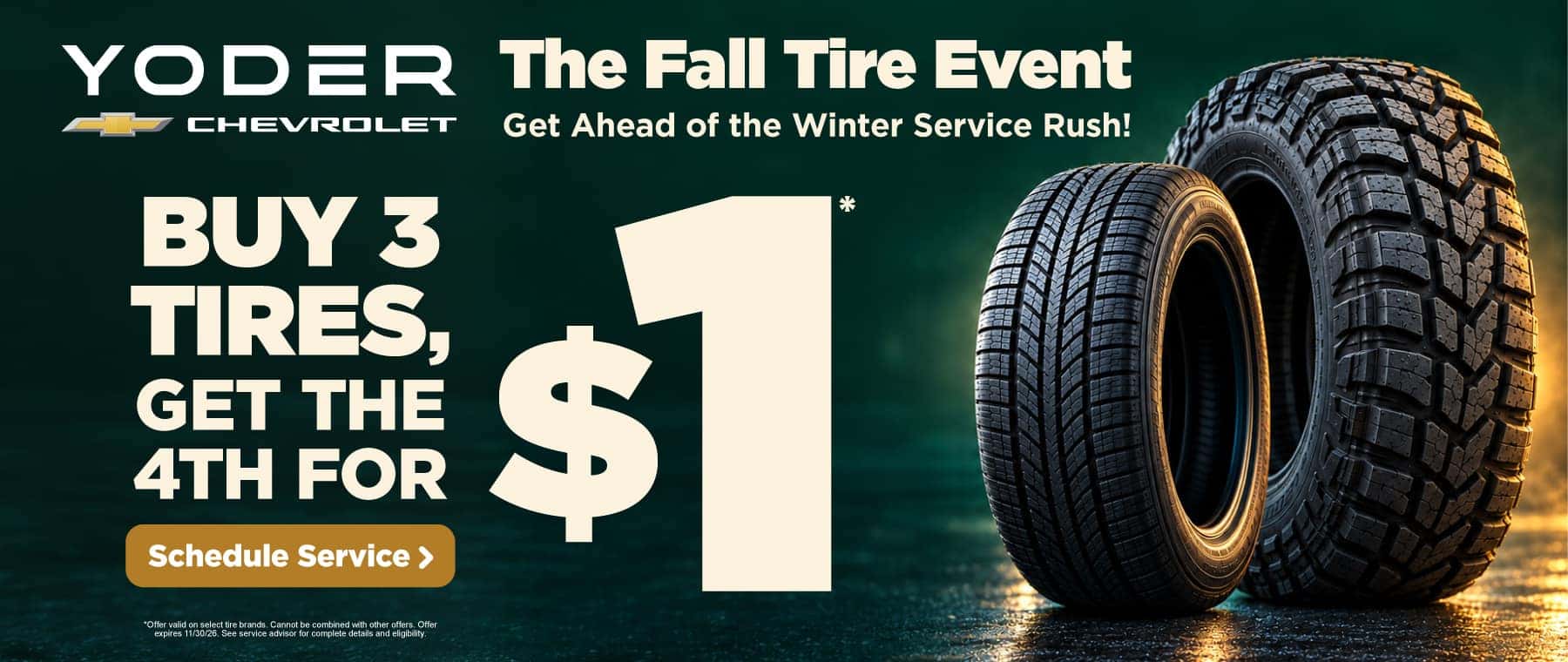
Buy 3 Tires, Get 1 for $1 — Ends November 30
The right time to change tires is before you need them. That’s not a cliche — it’s a scheduling reality. October and early November are when you can book a tire appointment in a day or two. After the first hard freeze, the wait stretches to a week or more at every shop in the area.
Our Buy 3 Tires, Get the 4th for $1 event runs through November 30, 2026 on qualifying sets. We carry Michelin, Goodyear, Bridgestone, and BFGoodrich in all-season, all-weather, and performance sizes for Chevrolet trucks and SUVs.
All-Weather vs. All-Season: Which One Do You Need?
All-season tires are designed for year-round use in mild climates. Most do not carry the Three-Peak Mountain Snowflake (3PMSF) rating, meaning they haven’t been tested for severe snow traction. All-weather tires do carry that rating and use a compound that stays pliable below 45°F.
For the typical Fort Lupton commuter, all-weather tires cover the full year and eliminate the need for a seasonal swap. For ranch or off-road work in deep snow, a dedicated all-terrain winter tire gives you better traction in loose, deep conditions. Ask our service team which fitment works best for your vehicle and driving habits.
Tread depth is the number that matters most. The legal limit is 2/32″, but 2/32″ in snow is nearly zero traction. The working minimum for safe winter driving is 6/32″. Put a quarter into your tread groove — if you can see all of Lincoln’s head, you’re at about 4/32″ and it’s time to replace before winter.
Installation includes mount and balance. If you’ve put more than 10,000 miles on your current set since the last alignment check, this is a good time to add an alignment inspection. Misaligned wheels wear new tires unevenly and cost you tire life you just paid for.
Silverado 4WD: What the Ranch Country Actually Needs
The Chevrolet Silverado 1500 is the right truck for most of what Weld County, Adams County, and Morgan County throw at a working vehicle. We have 2026 models in stock in several configurations, including Z71 trim with the off-road package.
The Z71 adds Rancho shocks, a two-speed transfer case with Auto 4WD, skid plates under the transfer case and fuel tank, and factory all-terrain tires. That’s not a trim option added to impress people on the lot — it’s a package that changes what the truck can actually do in mud, packed snow, and rough conditions. Hill descent control is included, which manages speed on steep, slippery descents without you riding the brake.
Silverado 1500 Z71: 4WD System Options
The Z71’s Autotrac 4WD offers 2WD, Auto 4WD, 4WD Hi, and 4WD Lo. Auto 4WD is the sweet spot for variable winter road conditions — it stays in 2WD until wheel slip is detected, then transfers torque automatically without any driver action. It disengages when traction is restored. 4WD Hi locks both axles for continuous traction in sustained snow, mud, or sand. 4WD Lo drops into a lower gear ratio for serious off-road work.
The 5.3L EcoTec3 V8 produces 355 horsepower and 383 pound-feet of torque. At Fort Lupton’s 4,920 feet, real-world output is about 315 horsepower — more than enough for towing through a headwind on I-76 in January.

The Silverado also offers a Multi-Flex tailgate, GM’s proprietary MultiPro-style design, which adds a step assist and a work surface. On a working ranch or job site in winter, that step matters when your boots are icy and your hands are full.
If you’re purchasing a new Silverado before October 31, the 0% for 60 months offer applies on qualifying configurations. At $50,000 to $65,000 depending on trim, the interest savings over a market-rate loan are significant. Talk to your sales advisor about which builds qualify.
Equinox and Traverse AWD: Everyday Traction Without the Truck
Not every family in Fort Lupton needs a truck. The Chevrolet Equinox and Traverse are both available with available AWD, and both handle Northern Colorado winters well for daily driving.
The Equinox with AWD is efficient and compact. The AWD system operates entirely automatically — there’s no mode to select, no button to press. It monitors wheel spin constantly and distributes torque to the rear axle when it detects a loss of front traction. It’s the right choice for someone who commutes to Brighton or Longmont on mixed roads and wants all-weather confidence without managing a 4WD system.
Traverse AWD: Three Rows, Full Winter Capability
The Traverse seats up to eight and comes with available AWD. For families running between Fort Lupton and Denver on I-76, the Traverse gives you the room for car seats, gear, and passengers with the traction for a February commute. Ground clearance is 8.2 inches — enough to handle unplowed subdivision roads and light ranch access.
Standard driver assistance features include automatic emergency braking, forward collision warning, lane keep assist, and rear cross-traffic alert. Those systems get tested more often than most people expect in low-visibility winter conditions.

Both the Equinox and Traverse include remote start as standard on most trim levels — which in a Colorado January is worth a real number. Warming the cabin and defrosting the windows before you walk outside is one of those features that sounds like a nicety until the first hard freeze of the year.
0% Financing for 60 Months — Expires October 31
The 0% for 60 months offer on select new Chevrolet vehicles closes October 31, 2026. That’s three weeks from today. After that date, this specific GM Financial incentive is gone regardless of inventory.
What 0% financing means in dollar terms: on a $55,000 Silverado financed for 60 months at a typical market rate of 6.9%, you pay about $9,800 in interest over the loan term. At 0%, you pay zero. That’s $9,800 you keep. It’s not a promotional trick — the math is simple.
No payments until 2027 means your first payment is due in January 2027 or later, depending on your closing date. If you close in mid-October, that could mean 2.5 months with no payment on a new vehicle. Terms and qualifying credit apply — see your Yoder Chevrolet sales advisor for specifics. Offer expires October 31, 2026 on qualifying inventory.
Qualifying models at Yoder Chevrolet include the Silverado 1500, Equinox, Traverse, and select other 2026 Chevrolet models in current inventory. Ask your sales advisor which specific stock numbers and configurations are eligible when you come in.
The Pre-Winter Checklist for Your Chevrolet
If you’re keeping your current vehicle through the winter, here’s what to verify before November. Our service team can run through all of these during a single appointment.
- Tire tread depth and pressure. 6/32″ minimum for winter driving. Check pressure monthly — cold air drops tire pressure about 1 PSI per 10-degree temperature drop. Low pressure in winter is common and quietly worsens handling.
- Battery load test. A 3-year-old battery can appear healthy on a warm day and fail on a cold morning. Load testing measures actual output under the kind of draw a cold engine produces. It’s a 15-minute check and worth doing before the first hard freeze.
- Coolant concentration. Your antifreeze protects down to a specific temperature that depends on the mix ratio. Check it with a tester strip or have it checked during your service visit. Fort Lupton sees temperatures down to -10°F in hard winters — a weak coolant mix can crack a block.
- AWD or 4WD engagement. For AWD vehicles, check that the AWD indicator light functions correctly and that there’s no warning message. For 4WD trucks, engage 4WD Hi in a parking lot and verify it engages and disengages cleanly with no hesitation or grinding.
- Brake system. Add extra following distance in winter means your brakes matter more, not less. Have pad thickness checked if you’ve put over 20,000 miles on your current set, or if you hear any squealing or feel any pulsing in the pedal.
- Wiper blades and washer fluid. Winter blades with a rubber-covered frame prevent ice buildup on the blade and wiper arm. Use washer fluid rated for -20°F. Standard summer concentrate freezes on contact with a cold windshield at highway speed — exactly when you need visibility most.
- Headlights and taillights. Days get shorter in November. A burned-out taillight in a ground blizzard is a genuine hazard. Walk around your vehicle in the dark and check all lights. Replacing a bulb takes five minutes and costs almost nothing.
Schedule your winter prep appointment online or call our service department. October slots fill faster than you’d expect — call now.
Frequently Asked Questions
More Guides for Fort Lupton and Northern Colorado Drivers
Service & Schedule
Yoder Chevrolet — Fort Lupton, CO
Get Your Chevy Ready Before the First Snow
Buy 3 Tires, Get 1 for $1 through November 30. 0% financing for 60 months on select new Chevrolet vehicles through October 31. Yoder Chevrolet, Fort Lupton, CO 80621. Call our service department to schedule.
Written by Ryan Green, Marketing Director at Yoder Chevrolet. Last updated October 2026. Information provided for educational purposes and reflects the author’s expertise with Chevrolet vehicles and Northern Colorado driving conditions. Tire event and financing offers have specific terms and expiration dates — see dealership for full details.
0 comment(s) so far on Before the First Snow: Is Your Chevy Ready?